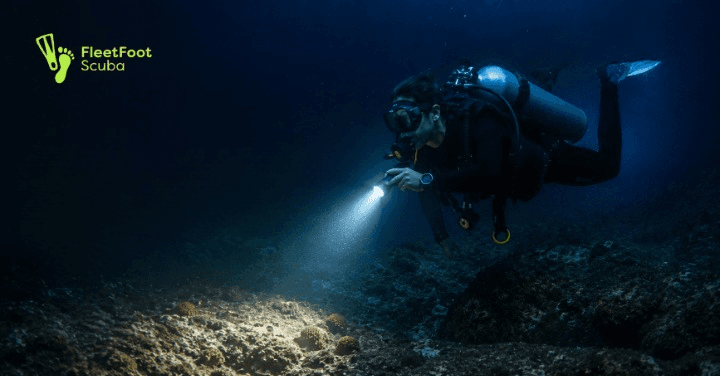
There's something unforgettable about your first night diving experience. The reef you've explored during the day transforms completely after sunset. Familiar landmarks disappear into the darkness, nocturnal creatures emerge, and your torch beam becomes a window into a hidden underwater world.
For many divers, night diving is both exciting and a little intimidating. The idea of entering the water after dark can feel daunting—but it often becomes one of the most memorable scuba diving training adventures you'll ever have.
Why Night Diving Feels Different
During the day, your eyes take in the entire reef at once. At night, your focus narrows to the circle of light in front of you. This creates a surprisingly calm and immersive experience. You become more aware of your breathing, buoyancy, and surroundings.
Many divers describe night diving as feeling like they're exploring an entirely new dive site—even when it's a reef they've visited dozens of times before.
What You'll See After Dark
As the sun sets, the ocean shifts.
Sleeping parrotfish tuck themselves into protective mucus cocoons, octopuses become more active, hunting creatures emerge from hiding, and bioluminescent organisms can sometimes create magical flashes of light in the water.
According to PADI, night diving lets you observe an entirely different set of marine behaviors compared to daytime dives, since many reef species are nocturnal. It's a side of scuba diving training that few people ever get to witness.
Managing First-Time Nerves
Feeling nervous before your first night diving experience is completely normal. The key is preparation. A thorough briefing, proper equipment checks, and staying close to your buddy can quickly turn anxiety into excitement.
You'll also discover that the darkness isn't complete. Your dive light, your buddy's light, and the glow of the surface often provide more visibility than first-time divers expect.
Why Advanced Divers Love It
Many divers are introduced to night diving during their advanced diving training. The experience helps improve navigation skills, buoyancy control, situational awareness, and confidence underwater.
It's one reason why advanced diving courses often include a night dive as one of the most rewarding specialty experiences available.
The Magic Moment
Ask experienced divers about their favorite underwater memories, and many will mention a night dive. It might be the sight of bioluminescence sparkling with every movement, a hunting octopus crossing their path, or simply the peaceful feeling of floating through a silent reef under the stars.
Your first night diving experience may begin with a little uncertainty, but it often ends with a new appreciation for scuba diving training and a desire to explore even more through advanced diving adventures.
Because once you've seen the ocean after dark, you'll never look at it the same way again.
Conclusion
Night diving is one of those scuba diving training experiences that completely changes how you see the underwater world. What feels intimidating at first quickly turns into one of the most rewarding parts of your diving journey, opening your eyes to a reef that's alive in ways you'd never notice during the day.
If you're already comfortable in the water and curious about what lies beneath the surface after dark, your first night dive could become the highlight of your entire scuba diving training story.
Connect With Us
Ready to experience the magic of night diving for yourself? Get in touch with our team to learn more about our night diving sessions, advanced diving courses, and everything else you need to plan your first dive after dark. We're here to answer your questions and help you take the next step in your scuba diving training journey.
FAQs
Q1: Is night diving safe for beginners?
Night diving is generally recommended for divers who already have some open-water experience and solid buoyancy control. Most operators require certification before you can take part in a night dive.
Q2: Do I need special equipment for night diving?
Yes, you'll need a primary dive light, a backup light, and sometimes a glow stick or marker light so your buddy and the dive boat can see you in the dark.
Q3: What marine life can I see during a night dive?
You may spot sleeping parrotfish, hunting octopuses, nocturnal crustaceans, and even bioluminescent organisms that aren't visible during the day.
Q4: How is night diving different from day diving?
Visibility is limited to your torch beam, which narrows your focus and creates a more immersive, calmer diving experience compared to daytime dives.
Q5: Will I feel scared during my first night dive?
It's completely normal to feel nervous before your first night dive. A proper briefing, staying close to your buddy, and trusting your training usually turns that nervousness into excitement.
Q6: Is night diving part of advanced scuba diving training?
Yes, many advanced scuba diving training programs include a night dive as one of the specialty dives, helping improve navigation, buoyancy, and overall confidence underwater.
Q7: How deep do you go on a typical night dive?
Night dives usually stay at similar or slightly shallower depths than day dives, since the focus is on exploring within your torch's visibility range rather than depth.